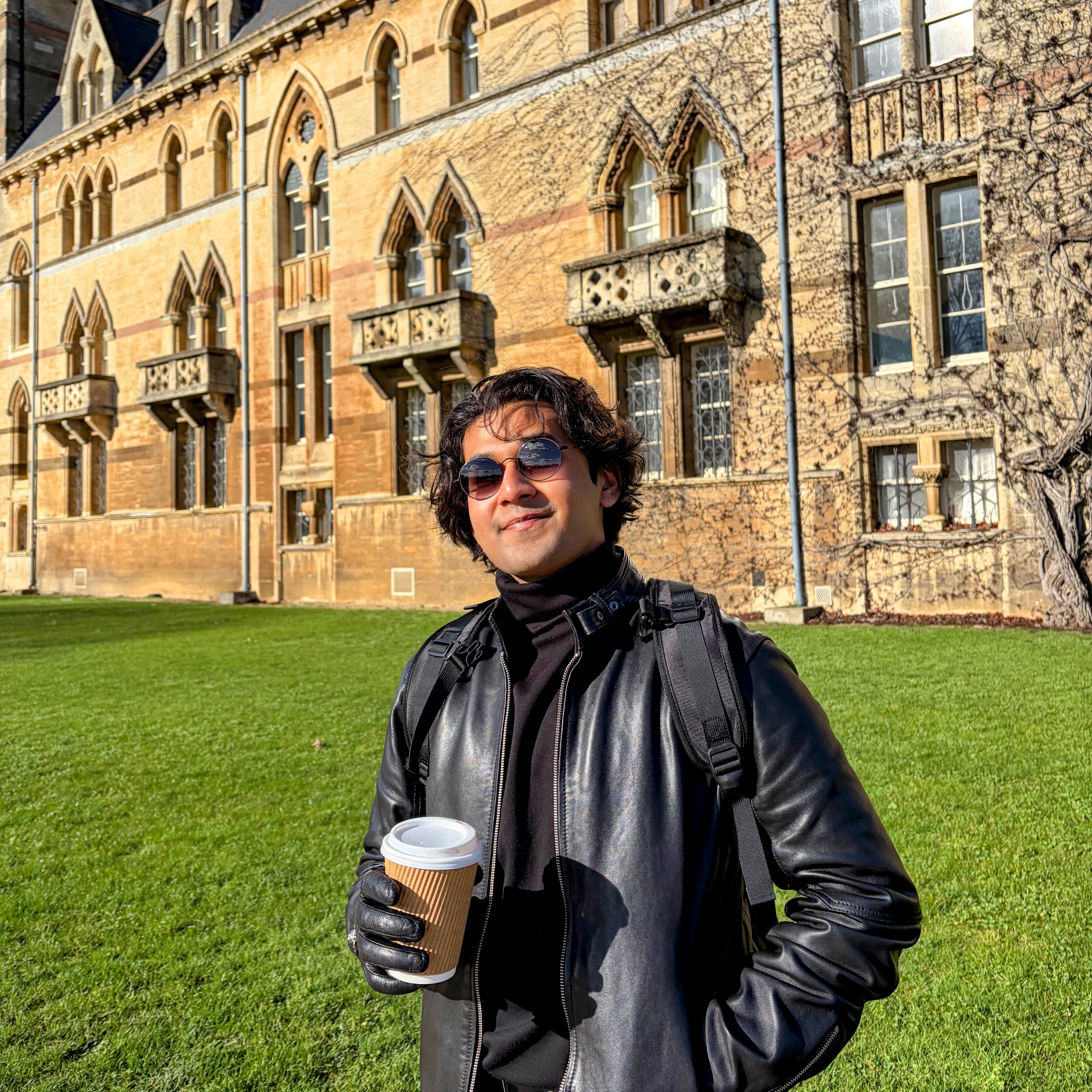
Married at 21, two failed startups, physics graduate but not really, and now all-in on building Candela in public.
Growing up
I grew up in India with the full "Indian nerd" experience: tuition classes after school, more tuition on weekends, and a singular goal of grades that I was pretty good at chasing. IB exams, national boards, Advanced Placements, SATs, I crushed all of them. I was the kid parents pointed at and said "why can't you be more like him?" (Sorry about that, by the way.)
When I was 18, I moved to the UK to study Physics at Imperial College London. I had never left India before, not even for a vacation, and suddenly I'm in London surrounded by people from everywhere, trying to figure out how the tube works and why nobody makes eye contact. It was surreal, but it was also a chance to reinvent myself, and I think that's when things started to shift.
The Ivy League rejection that taught me everything
Here's the thing nobody tells you about perfect grades: everyone applying to top universities has them. I applied to Ivy League schools with the scores, the test results, all the checkboxes ticked, and I got rejected.
Looking back, it's obvious why. When they asked me what I'd built, I had nothing to say. When they asked me to talk about a problem I'd solved, I could only talk about exam problems. My interviews were forgettable, and I was one of thousands of high-scoring kids with nothing interesting to say.
If I had built something real, anything real, and talked about it with genuine excitement in those interviews, I would have gotten in. I'd just spent 18 years with my head down studying and nothing else.
University: where I finally started building
At Imperial, something clicked. I got obsessed with this question: why can't people stick to journaling every day, even when literally everyone agrees it's good for you? So I did something I had never done in my life and talked to strangers, about 200 of them. Random people, friends of friends, people I cornered at events, anyone who would give me 15 minutes to understand their relationship with journaling.
Then I started building. We called it Higher You, an AI journaling app that would get people to stick with it. Version 1 was terrible and version 2 was somehow worse. By version 5 I was questioning my life choices, but we kept going, and version 12 was genuinely good.
We won hackathons, got users, and learned more about building products in those months than I had in years of lectures. Then we shut it down because it wasn't working as a business and the market wasn't there. Classic startup story.
Failing taught me more than succeeding
When I started applying for jobs after university, something interesting happened. Interviewers would glance at my grades, say "nice," and move on. But the moment I mentioned Higher You, their eyes lit up. Tell me more. What did you learn? What would you do differently? How did you handle disagreements with your co-founder?
I had real stories to tell about real problems I had faced, about users who gave us harsh feedback, about pivoting when our assumptions were wrong and shipping something and watching it fail. I got good job offers because I had built something and could talk about it for 30 minutes without running out of things to say, which turned out to matter a lot more than a perfect SAT score that nobody ever asked about.
What I'm doing now
I spent six months at Metris (Nov 2025-Apr 2026), building the Customer Success function after graduating inside an early-stage solar energy startup. Sitting next to the CEO while handling customer reality in real time was the best training ground I could have asked for.
Now I'm building Candela to help young people become more attractive to employers and do what they love. The world is changing fast, and most of what students are taught still trains for exams, not for reality. I want to fix that.
On the side, I run First Ascent, a 12-week programme helping ambitious teenagers build real projects. It exists because I wish someone had shown me how to build at 16 instead of figuring it out at 21.
I also write about careers, rules, and whatever I'm figuring out in my twenties. If that sounds like your thing, here's the rest of it.
The timeline
Want to talk? Email me. Or read something I wrote →